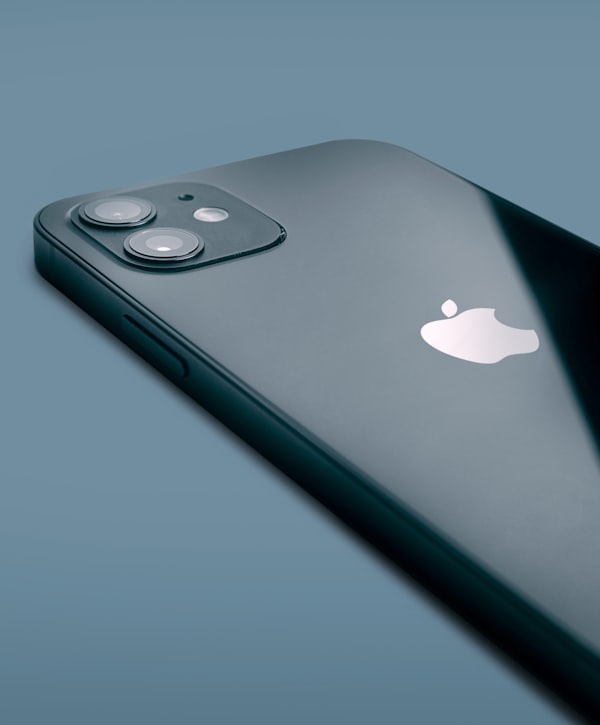

Vivo has always taken camera technology seriously. While competitors have focused on computational photography and AI enhancement, Vivo has steadily invested in optical engineering — partnering with Zeiss since 2020, developing custom imaging chips, and pushing the boundaries of what smartphone lenses can achieve. The upcoming Vivo X300 Pro represents the culmination of this optical-first philosophy, introducing technologies previously reserved for professional cinema cameras and high-end microscopy.
The headline feature is undoubtedly the Zeiss APO telephoto lens, a genuine apochromatic design that corrects chromatic aberration across three wavelengths rather than the two wavelengths handled by conventional achromatic lenses. For photographers, this means sharper images with no purple fringing around high-contrast edges. For everyday users, it means photos that look more natural and require less computational correction.
Zeiss APO Lens: Professional Optics in Your Pocket
Chromatic aberration has plagued smartphone cameras since their inception. Because different wavelengths of light bend at slightly different angles when passing through glass, inexpensive lenses produce color fringing around bright objects — the purple halos you sometimes see around tree branches against a bright sky. Most smartphones correct this computationally, but the correction reduces sharpness and can produce artifacts in challenging scenes.
The Zeiss APO lens solves this at the optical level. By combining special low-dispersion glass elements with exotic anomalous partial dispersion materials, the lens brings red, green, and blue light to the same focal point simultaneously. This is the same technology used in Zeiss's cinema lenses, which cost tens of thousands of dollars. Vivo's achievement is miniaturizing this design to fit within a smartphone's 8.5mm thickness.
"The APO designation isn't marketing. We've achieved true apochromatic correction in a mobile form factor for the first time. The MTF charts are unlike anything we've seen from a smartphone lens." — Zeiss optical engineer involved in X300 Pro development
The APO lens serves the 3.7x telephoto camera with an 85mm equivalent focal length — a classic portrait perspective that flatters human subjects. The large f/2.0 aperture combined with the APO correction produces portraits with natural background blur and razor-sharp subject detail, even in challenging backlighting conditions.
Vivo X300 Pro Camera System Specifications
| Camera | Vivo X200 Pro | Vivo X300 Pro (Leaked) |
|---|---|---|
| Main | 50MP 1/0.98" f/1.75 | 50MP 1-inch f/1.6 OIS |
| Telephoto | 200MP f/2.67 3.7x | 200MP f/2.0 3.7x Zeiss APO |
| Periscope | None | 200MP f/2.8 5x OIS |
| Ultrawide | 50MP f/2.0 | 50MP f/2.0 with macro |
| Front | 32MP f/2.45 | 50MP f/2.0 AF |
| Lens Coating | Zeiss T* | Zeiss T* 2.0 |
200MP Periscope: Reaching Farther, Seeing Clearer
While the APO telephoto handles medium-range zoom with optical perfection, the X300 Pro also introduces a dedicated 200MP periscope camera for long-range photography. This module offers 5x optical zoom with a 120mm equivalent focal length, extending to 100x digital zoom through a combination of sensor cropping and AI enhancement.
The periscope uses a 1/1.4-inch sensor — unusually large for a telephoto module — which captures significantly more light than competing designs. This large sensor enables better low-light performance at zoom ranges where most smartphones produce noisy, unusable images. The module also features sensor-shift optical image stabilization, compensating for hand shake across five axes.
Vivo has developed a new Zoom Fusion Engine that seamlessly blends input from the main camera, APO telephoto, and periscope as you zoom. Rather than abrupt jumps when switching between cameras, the transition is smooth and imperceptible. The engine also uses AI to predict camera movement and pre-position the stabilization mechanism, reducing blur from shutter press and hand shake.
Key Takeaway
The Vivo X300 Pro's Zeiss APO lens uses special low-dispersion glass to eliminate chromatic aberration at the optical level, producing sharper images with natural color accuracy that requires less computational correction.
V3+ Imaging Chip: Vivo's Secret Weapon
While most smartphone manufacturers rely entirely on the main chipset's ISP for image processing, Vivo has developed its own dedicated imaging chips since the V1 in 2021. The X300 Pro introduces the V3+, the fourth generation of this custom silicon, manufactured on a 6nm process specifically for imaging tasks.
The V3+ handles real-time noise reduction, HDR merging, and bokeh rendering independently of the main Snapdragon 8 Elite 2 chipset. This frees the main processor for other tasks while enabling more sophisticated image processing than would be possible through software alone. The chip can process 18-bit RAW data at 120 frames per second, enabling features like real-time HDR preview in the viewfinder.
For video, the V3+ enables 4K cinematic mode at 60fps with real-time depth mapping and natural bokeh transitions. It also powers a new Night Video Mode that combines temporal noise reduction across up to 32 frames for remarkably clean footage in dim conditions. Professional users will appreciate the ability to output 10-bit LOG footage for color grading in post-production.
Design and Display: Refined Elegance
The X300 Pro's design language evolves from the X200 series with a more refined circular camera module that sits flush with the back panel thanks to the thinner lens stacks enabled by the APO design. The back panel uses a new ceramic-glass hybrid material that Vivo claims is 40% more scratch-resistant than traditional glass while feeling warmer and more premium to the touch.
The display is a 6.82-inch LTPO AMOLED panel with 3200×1440 resolution, 1-120Hz adaptive refresh, and 5000 nits peak brightness. Vivo has worked with BOE to develop a new tandem OLED structure that stacks two emission layers for improved efficiency and longevity. The panel supports 2160Hz high-frequency PWM dimming for eye comfort in low-light conditions.
Color options include Classic Black, Pearl White, and a striking Sunset Orange with a genuine leather back panel. A limited Zeiss Edition features a matte black finish with Zeiss blue accents and exclusive camera app themes inspired by Zeiss's cinema lens lineup.
Performance and Battery
The Snapdragon 8 Elite 2 needs little introduction at this point — it's the fastest mobile chipset available when the X300 Pro launches. Vivo pairs it with 16GB of LPDDR5X RAM and up to 1TB of UFS 4.1 storage, ensuring the device never feels sluggish regardless of workload.
Thermal management uses a vapor chamber cooling system with 6000mm² surface area, keeping the chipset within optimal temperature ranges during extended camera use and gaming sessions. The X300 Pro also includes an ultrasonic under-display fingerprint sensor that works even with wet fingers — a genuine quality-of-life improvement over optical alternatives.
Battery capacity is 5600mAh, with charging speeds of 120W wired and 50W wireless. A full wired charge takes approximately 24 minutes, while the wireless charging speed matches many competitors' wired speeds. Reverse wireless charging at 10W allows the X300 Pro to top up accessories.
Vivo X300 Pro Release Date and Pricing
Mass production of the X300 Pro is scheduled to begin in March 2027, with a Chinese launch event expected in April 2027. Vivo typically follows a staggered global rollout, with Indian and Southeast Asian markets receiving the device by May, European markets by June, and limited Middle Eastern availability by July.
North American availability remains unlikely due to Vivo's limited carrier partnerships and ongoing market challenges. However, the device should be available through import channels for enthusiasts willing to pay a premium.
Chinese pricing is expected to start at ¥5,999 (approximately $820) for the 12GB/256GB model, with the top-tier 16GB/1TB configuration approaching ¥7,999. European pricing will likely start at €1,099, positioning the X300 Pro as a premium alternative to Samsung's Galaxy S26 Ultra.
Should You Wait for the Vivo X300 Pro?
For photography enthusiasts who prioritize optical quality over computational tricks, the X300 Pro is arguably the most exciting smartphone on the horizon. The Zeiss APO lens represents genuine optical innovation, not marketing speak, and the 200MP periscope addresses the long-range zoom capabilities that previous Vivo flagships sometimes lacked.
If you currently own an X100 Pro or X200 Pro, the upgrade is compelling if you frequently shoot portraits or telephoto subjects. The APO lens's elimination of chromatic aberration will be immediately visible in high-contrast scenes, and the periscope adds genuine utility for travel and wildlife photography. For general users, however, the core experience remains similar to previous generations.

Li Wei
Optical Engineering Specialist at SmartphoneTrend. Formerly at Zeiss and Leica Camera. PhD in applied optics from Tsinghua University. Tracking mobile lens design since 2016.