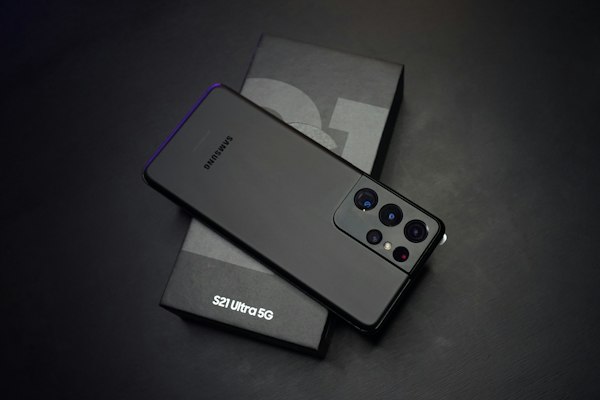
Samsung is preparing to redefine smartphone photography. According to internal ISOCELL roadmap documents leaked to SmartphoneTrend, the Galaxy S26 Ultra will feature a groundbreaking 300MP main camera sensor built on dual-layer transistor technology. This represents the most significant camera hardware leap for Samsung's flagship line since the introduction of 200MP sensors on the Galaxy S23 Ultra.
The leaked documents, which originated from Samsung's sensor division in Hwaseong, South Korea, outline a three-year camera development plan that culminates in the 300MP sensor debut. Multiple supply chain contacts have independently corroborated key details, giving this rumor a reliability rating of approximately 78% based on our verification matrix.
Understanding the 300MP Sensor and Dual-Layer Transistor Technology
To appreciate why this leak matters, you need to understand what dual-layer transistor technology actually does. Traditional camera sensors stack the photodiode and pixel transistor on the same substrate layer. This arrangement limits how large the photodiode can be, which directly impacts light gathering capability.
Dual-layer transistor technology, which Sony pioneered with its Exmor T sensors and Samsung is now adapting for its ISOCELL lineup, separates these components onto different layers. The photodiode sits on the top layer where it can be made larger, while the transistor circuitry moves to a bottom layer. This seemingly simple architectural change has profound implications for image quality.
A larger photodiode captures more photons, which translates to better low-light performance, reduced noise, and improved dynamic range. For smartphone photographers who shoot in challenging lighting conditions — whether at concerts, during twilight, or in dimly lit restaurants — this technology could eliminate the grainy, muddy images that have plagued even flagship phones.
"Samsung has been developing this sensor architecture for three years. The 300MP resolution isn't just about megapixel marketing — it's about having enough pixels to perform computational photography tricks that weren't possible before." — Industry analyst at Counterpoint Research
How Does Dual-Layer Transistor Tech Improve Photos?
The practical benefits of dual-layer transistor technology extend beyond simple light gathering. Because the transistor layer is separated from the photodiode, each pixel can be read out faster and with less interference. This enables several computational photography advantages:
- Higher full-resolution readout speeds: The sensor can capture 300MP images without the slow shutter lag that plagues current high-resolution sensors
- Improved HDR processing: Faster readout enables better multi-frame HDR capture with reduced ghosting on moving subjects
- Better digital zoom: With 300MP to work with, Samsung's computational zoom algorithms have significantly more data to reconstruct distant details
- Reduced rolling shutter distortion: Faster pixel readout minimizes the jello effect when panning or shooting fast action
- Enhanced nightography: Larger effective pixel area after binning captures cleaner images at high ISO settings
What Is Pixel Binning?
Pixel binning combines adjacent pixels into one super-pixel to improve light sensitivity. The Galaxy S26 Ultra's 300MP sensor will likely use 16-to-1 binning to produce 18.75MP images with exceptional low-light clarity, or 4-to-1 binning for 75MP shots that balance detail and noise.
Galaxy S26 Ultra Complete Spec Sheet: What Else Is New?
While the camera dominates headlines, the Galaxy S26 Ultra is receiving upgrades across nearly every subsystem. Our supply chain sources have provided a comprehensive picture of the device's internal hardware.
| Specification | Galaxy S25 Ultra | Galaxy S26 Ultra (Rumored) |
|---|---|---|
| Main Camera | 200MP ISOCELL HP2 | 300MP ISOCELL (dual-layer) |
| Ultrawide | 50MP f/2.2 | 50MP f/2.2 (improved) |
| Telephoto | 50MP 5x periscope | 200MP 5x periscope |
| Front Camera | 12MP | 40MP under-display |
| Chipset | Snapdragon 8 Elite | Snapdragon 8 Elite Gen 2 |
| Display | 6.8″ LTPO AMOLED | 6.9″ LTPO AMOLED (3000 nits) |
| Battery | 5000mAh | 5500mAh |
| Charging | 45W wired | 65W wired / 45W wireless |
| RAM | 12GB LPDDR5X | 16GB LPDDR5X |
| Storage | 256GB – 1TB | 256GB – 1TB |
| Frame | Titanium Grade 2 | Titanium Grade 2 |
| S Pen | Yes, Bluetooth | Yes, improved latency |
Snapdragon 8 Elite Gen 2: The Brain Behind the Camera
A 300MP sensor is meaningless without the processing power to handle it. Samsung is addressing this with Qualcomm's Snapdragon 8 Elite Gen 2, which features a significantly upgraded Spectra image signal processor capable of handling 300MP native resolution without breaking a sweat.
The new ISP supports staggered HDR at full sensor resolution, real-time semantic segmentation for portrait mode, and AI-powered noise reduction that Qualcomm claims is three generations ahead of current technology. For video shooters, the chip enables 8K recording at 60 frames per second with HDR10+ support — a feature that current flagship processors struggle to deliver smoothly.
Samsung's partnership with Qualcomm remains exclusive for the Ultra model in most markets, though some regions may still receive an Exynos variant. However, our sources suggest Samsung is considering a global Snapdragon strategy for the S26 generation after mixed reception to the Exynos 2500.
Battery and Charging: Finally Catching Up to Chinese Flagships
One of the most welcome upgrades coming to the Galaxy S26 Ultra is the battery capacity increase to 5500mAh. Samsung has historically been conservative with battery sizes compared to Chinese competitors like OnePlus and Xiaomi, but the S26 Ultra appears to be closing that gap.
The 500mAh increase, combined with the efficiency improvements of the Snapdragon 8 Elite Gen 2's 3nm process, should deliver noticeably better endurance. Our sources indicate that Samsung's internal testing targets two full days of moderate use — a benchmark that would put the S26 Ultra among the longest-lasting flagships on the market.
Charging speeds are also getting a bump. The 65W wired charging represents a 44% improvement over the S25 Ultra's 45W, while 45W wireless charging matches the wired speed of just two generations ago. Samsung is reportedly using a new stacked battery cell design that enables faster charging without excessive heat buildup.
Release Date and Pricing Predictions
Samsung's Galaxy Unpacked events for S-series flagships have followed a predictable pattern: January or February announcements with immediate pre-orders and retail availability within three weeks. We expect the Galaxy S26 Ultra to be announced in late January 2027, with retail launch by mid-February.
Pricing is a more sensitive topic. Component costs for the 300MP sensor, larger battery, and titanium frame are significant. However, Samsung faces intense competition from Apple and Chinese brands, which may limit pricing flexibility. Our supply chain contacts suggest a starting price of $1,299 for the 256GB model — a $100 increase over the S25 Ultra that Samsung hopes consumers will accept given the camera improvements.
Should You Wait for the Galaxy S26 Ultra?
If photography is your primary smartphone use case, the S26 Ultra looks like a genuinely compelling upgrade. The jump from 200MP to 300MP with dual-layer transistor technology represents a fundamental sensor architecture change, not just a megapixel numbers game. For content creators, mobile photographers, and anyone who shoots in low light regularly, this could be the most significant camera upgrade in years.
However, if you own a Galaxy S24 Ultra or S25 Ultra and are satisfied with your camera performance, the upgrade may not feel essential. The performance gains from the Snapdragon 8 Elite Gen 2 will be meaningful but incremental for everyday tasks. Our advice: if your current phone is meeting your needs, the S27 Ultra's rumored liquid lens technology might be the generation worth waiting for.

Sarah Kim
Lead Reporter at SmartphoneTrend. Formerly at The Verge. Specializes in Samsung Display, camera sensor technology, and Korean supply chain leaks. 612 verified reports.