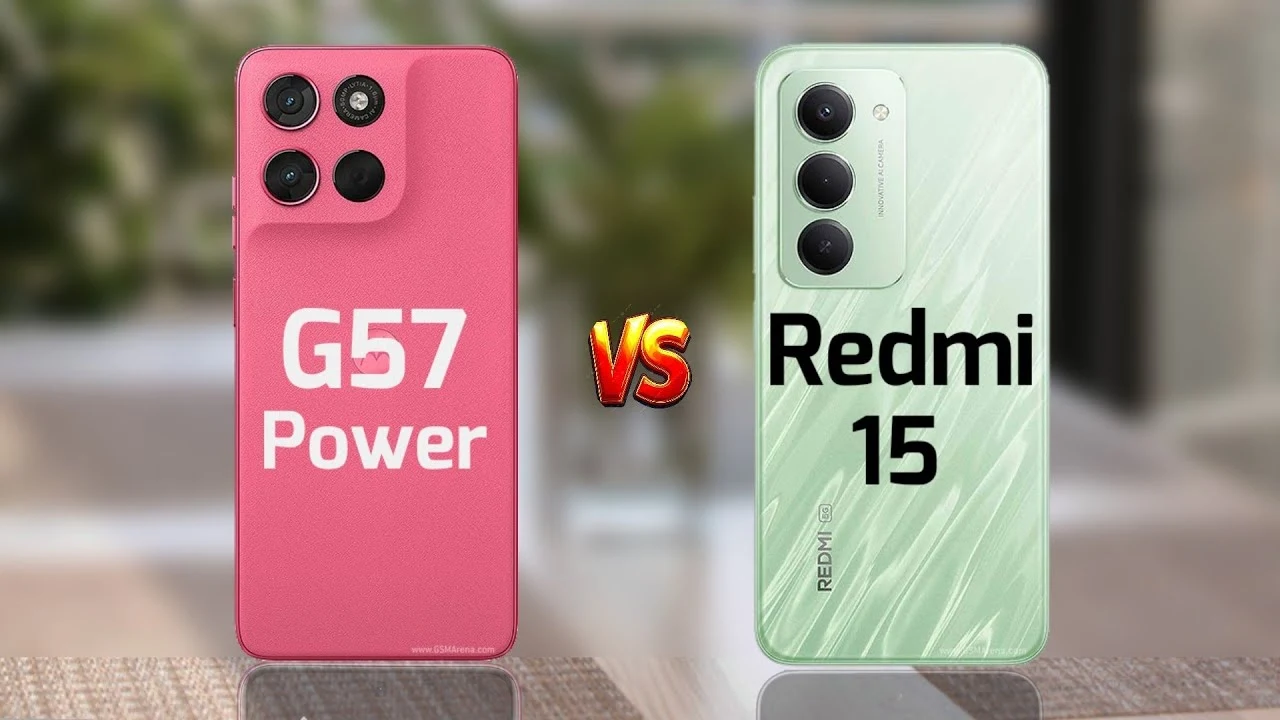
| Feature / Spec | Moto G57 Power | Redmi Note 15 5G |
|---|---|---|
| Display | 6.72″ LCD, 120 Hz, ~1050 nits peak brightness | 6.9″ IPS LCD, up to 144 Hz, 850 nits brightness |
| Processor (India) | Snapdragon 6s Gen 4 | Snapdragon 6s Gen 3 |
| RAM / Storage (common config) | 8 GB RAM + 128 GB storage | 6 GB / 8 GB RAM + up to 256 GB storage (with card) |
| Rear Camera | 50 MP (Sony LYT-600) + 8 MP ultra-wide | 50 MP main + AI dual-camera setup |
| Battery | 7000 mAh + 33 W fast charging | 7000 mAh + 33 W fast charging + 18 W reverse charging |
| OS / Software | Android 16 (Hello UI) | HyperOS 2 (Android 15) |
| Other notable features | Gorilla Glass 7i, stereo speakers, 3.5 mm jack, IP-rating (dust/water splash resistance) | IR Blaster, side fingerprint sensor, expandable storage (microSD) |
Design & Build
Moto G57 Power: The phone is a bit on the bulkier side (due to the large battery), but offers a rugged build, Gorilla Glass 7i protection, and added perks like stereo speakers and a 3.5 mm audio jack. The build feels practical and durable — good for everyday use and moderate rough handling.
Redmi Note 15 5G: Slightly larger screen size gives a bigger footprint, but it maintains a manageable form factor. The design includes an aerospace-grade back panel (for the camera housing), IP-rating for dust/splash protection, and expandable storage — a plus if you need extra space for apps or media.
Verdict: Moto G57 Power feels sturdier and more “balanced for rough use,” whereas Redmi Note 15 5G offers a slightly larger viewing surface and design features that give it value for everyday use (including IR blaster and expandable storage).
Display & Media
Moto G57 Power: Offers a 6.72″ FHD+ LCD with 120 Hz refresh rate and peak brightness around 1050 nits, which is more than enough for bright daylight visibility and smooth UI experience. Good for browsing, video, and casual gaming.
Redmi Note 15 5G: Has a 6.9″ IPS LCD with up to 144 Hz refresh rate and 850 nits brightness. The larger screen is ideal for video consumption and reading. Slightly lower brightness compared to Moto, but the higher refresh rate and larger screen area make it good value for multimedia.
Verdict: If you prefer a compact-ish display with good brightness and slightly more accurate screen, Moto G57 Power wins. If display size and smoother refresh rate matter more (e.g. watching videos, reading, casual gaming), Redmi Note 15 5G is a better pick.
Camera Performance
Moto G57 Power: Equipped with a 50 MP Sony LYT-600 main sensor and an 8 MP ultra-wide lens. For daylight photos and regular use, this setup should deliver decent results. Video recording and low-light performance are acceptable for its price range.
Redmi Note 15 5G: Also offers a 50 MP main camera with AI dual-camera support. While not a flagship-level setup, the camera aims to balance performance with affordability. Good for everyday photos, social media, and casual shooting.
Verdict: Both phones are roughly similar in camera hardware. Moto G57 Power may have slight edge in ultra-wide versatility; Redmi’s advantage lies in more balanced features like storage expansion and overall value — real-world photo output may be close, but choices depend on what you prioritise (flexibility vs balanced features).
Performance & Software
Moto G57 Power: Runs on Snapdragon 6s Gen 4, with 8 GB RAM + 256 GB UFS 2.2 storage in higher variants. Performance is sufficient for daily tasks, streaming, light gaming and multitasking. It offers stereo audio and a clean Android-based Hello UI experience.
Redmi Note 15 5G: Uses Snapdragon 6s Gen 3 (Indian variant), with RAM up to 8 GB and storage up to 256 GB (with microSD expansion). Runs on HyperOS 2 (Android 15), giving reasonably good performance for everyday apps, social media, and casual gaming.
Verdict: Moto G57 Power delivers slightly better raw specs and a cleaner software experience, especially in higher-RAM/storage variants. Redmi Note 15 5G offers adequate performance for everyday needs and adds flexibility with storage expansion.
Battery Life & Charging
Both phones pack a 7000 mAh battery, which is excellent for endurance — easily lasting a day or more under moderate to heavy use. mint+1
- Moto G57 Power supports 33 W fast charging and includes stereo speakers and a 3.5 mm jack which can be handy for media and long usage sessions.
- Redmi Note 15 5G also supports 33 W fast charging, and adds 18 W reverse charging — useful for charging other devices in emergencies. Expandable storage and IR blaster add extra utility for daily users.
Verdict: Battery endurance is identical. Charging speed and additional features go to Moto G57 Power, but reverse charging and utility extras make Redmi Note 15 5G more versatile in daily life.
Overall Value: Which Is Better?
Choose Moto G57 Power if you want:
- Slightly more balanced performance for everyday tasks and light gaming
- Smarter battery + stereo speakers + 3.5 mm jack — better for media and long use
- A compact device with decent display and rugged build
Choose Redmi Note 15 5G if you want:
- Bigger display for streaming, reading and media
- Expandable storage and extra utility features (IR blaster, reverse charging)
- A phone focused on value, versatility and feature-set breadth for price
Bottom line: For a user who prioritizes battery life, balanced performance and media-friendly features — Moto G57 Power offers slightly better “all-around” value. For someone who values larger display, storage flexibility and overall versatility, Redmi Note 15 5G may give a bit more bang for the buck.
FAQs
Q: Will 7000 mAh battery on either phone last two days?
Yes — both phones with 7000 mAh battery and efficient software should easily deliver more than a day’s usage; light to moderate users may get close to two days.
Q: Is the camera good enough for social media and casual photos?
Yes — both phones have 50 MP main cameras that are good for daylight photos, social media uploads, and everyday snapshots. Low-light or professional photography will be limited, though.
Q: Which phone is better for gaming and multitasking?
Moto G57 Power has a slight edge due to its chipset and RAM configuration, making it a bit better for gaming and multitasking. For casual games and everyday apps, both perform fine.