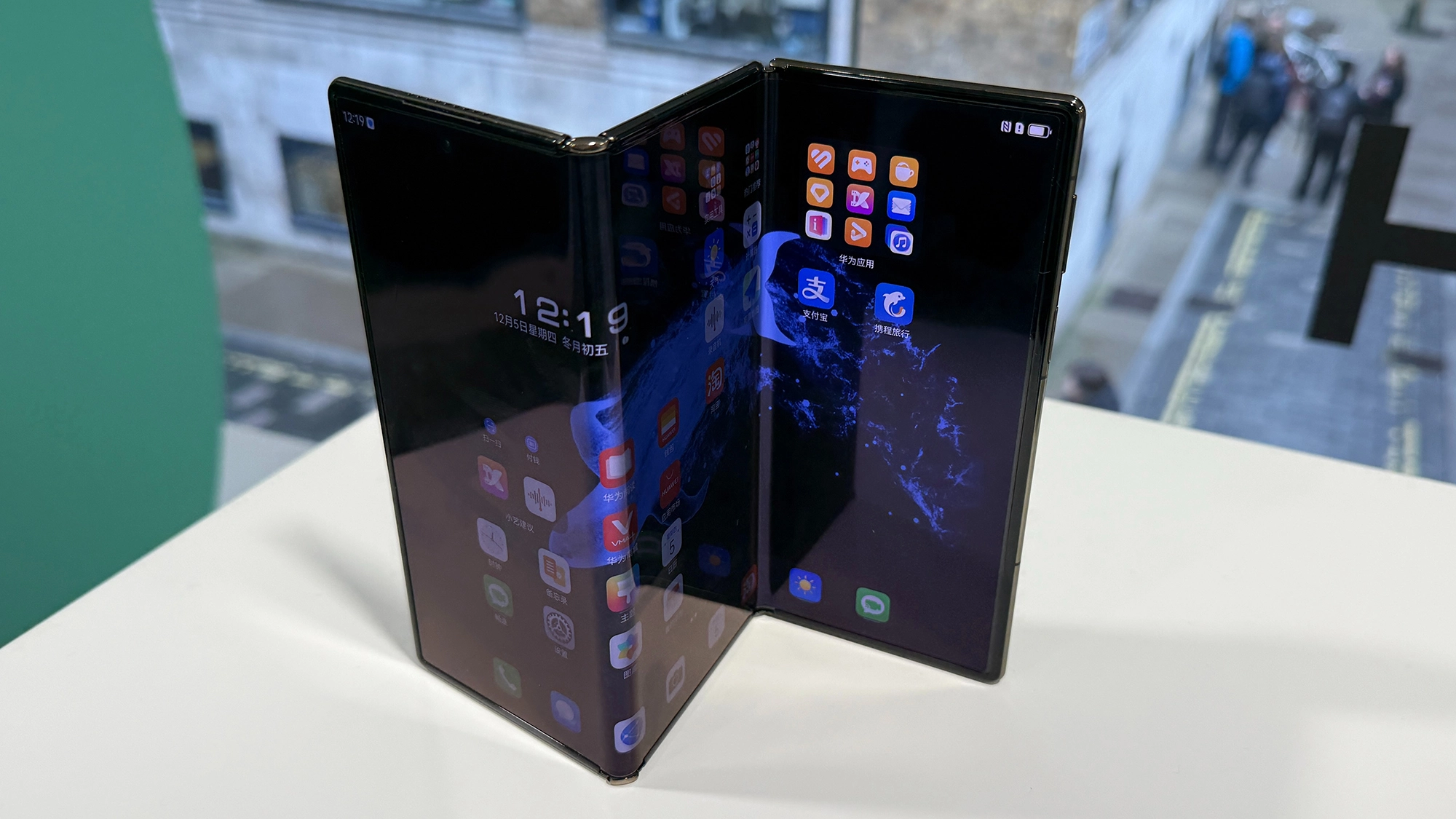
A recent YouTube stress test has put the Samsung Galaxy Z TriFold’s hinge system through its paces — and it managed roughly 150,000 folds before showing signs of wear. Despite the strain, the foldable’s display stayed functional throughout, giving a mixed but interesting signal about real-world endurance.
What Happened — Test Details at a Glance
- A South-Korea based YouTube channel (acting outside lab conditions) livestreamed a repeated fold/unfold test on the TriFold.
- The first hinge began to creak around 61,000 folds, and the second hinge started making sounds by about 121,000 folds.
- By approximately 144,000 folds, testers reported the hinge had lost much of its elasticity — meaning the phone could no longer stay “fully open” on its own and required extra force.
- Despite this mechanical wear, the display panels continued working fine, even when testers pushed all the way to ~150,001 folds.
Official Durability Claims vs Real-World Stress Test
- The manufacturer claims the Galaxy Z TriFold is designed to endure up to 200,000 folds — simulating roughly 100 folds a day for five years.
- In contrast, this independent “torture test” ended hinge-performance degradation somewhat before that mark (~144–150 K folds).
- Observers note that the test conditions — continuous folding over just days — are far harsher than typical user behavior (fold/unfold occasionally throughout weeks/months/years).
What This Means — Practical Implications for Users
- Surviving 150,000 folds under aggressive conditions suggests the Galaxy Z TriFold is reasonably durable — chances are that under typical use, you’d likely never reach that many cycles.
- But the hinge “give-up” after heavy folding indicates foldables remain mechanically vulnerable — if you frequently open/close or stress the device (tight pockets, bending, rough usage), you might notice hinge wear earlier.
- Display integrity seems fairly robust despite hinge wear — a good sign that structural failure doesn’t necessarily coincide with screen failure (at least in this test).
Why This Test Matters
For foldable devices like the TriFold — with multiple hinges and larger displays — durability is a key concern for buyers. Independent tests like this help:
- Provide a reality check on official marketing claims (200,000-fold endurance).
- Expose potential weaknesses under extreme or prolonged mechanical stress — useful for heavy users or those who handle phones roughly.
- Offer insights into how the device might age over years of use, beyond lab simulations.
FAQs
Does 150,000 folds mean the TriFold is safe for everyday use?
Likely yes — the fold count reflects a stress test far more aggressive than typical usage. For most users, normal folding habits should be much gentler.
Did the screen break or stop working during the test?
No — according to the test, the display remained operational even after 150,000 folds.
Should users be worried about hinge failure?
If you treat the phone roughly — frequent folds, pressure, or tight storage — there’s some risk. But under casual, everyday use, such massive hinge stress is unlikely.
Does this mean Samsung’s 200,000-fold promise is false?
Not necessarily — the test was unusually aggressive and continuous. Real-world use is usually much slower and gentler, so actual usable life could still approach or meet Samsung’s endurance estimate.