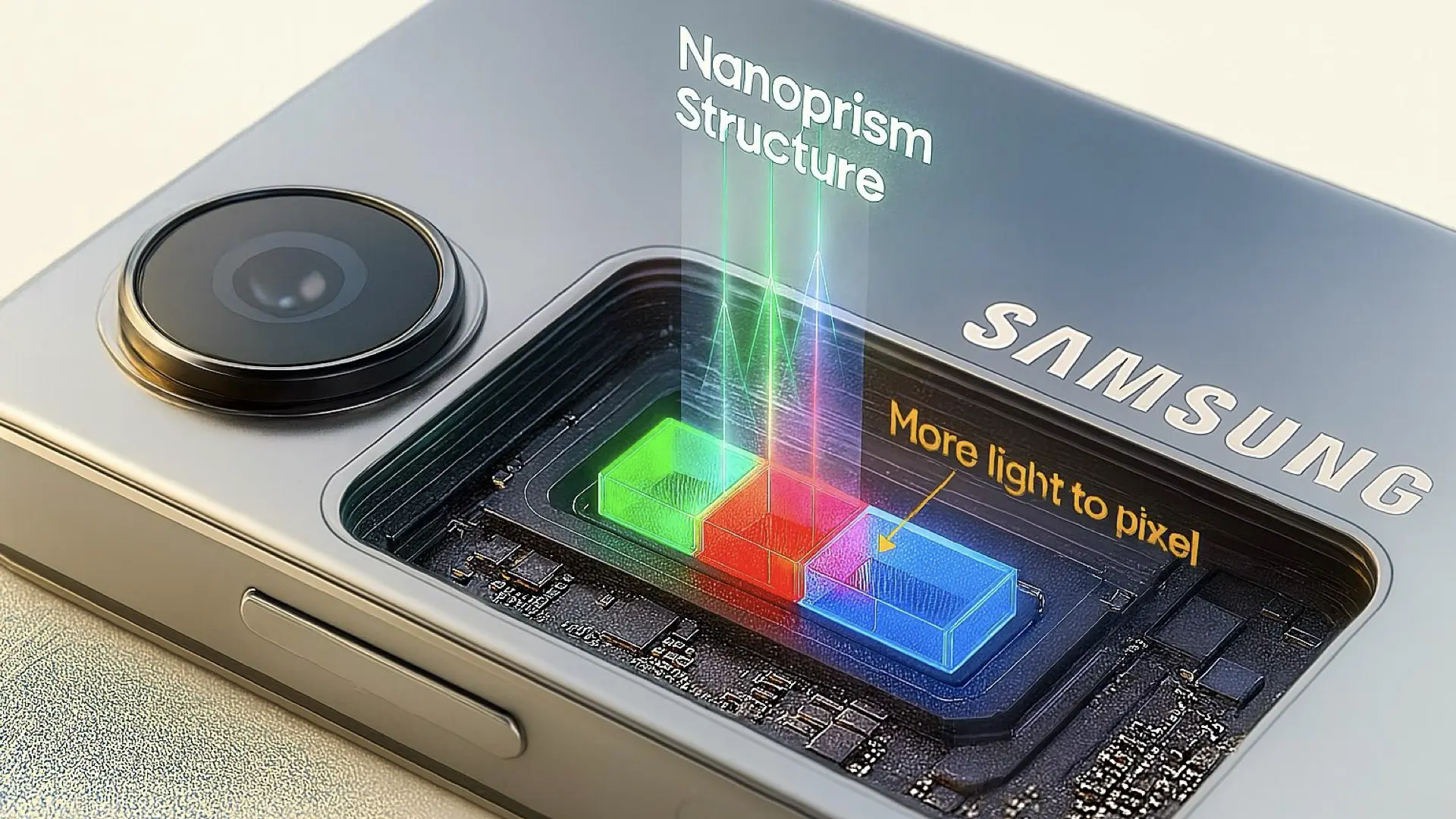
Samsung is reportedly developing a cutting-edge camera sensor with global shutter-level capabilities that could debut on future flagship Galaxy smartphones, potentially improving how fast-moving subjects are captured and reducing image distortion that plagues conventional phone cameras. This development appears to be aimed at solving long-standing issues in mobile photography and bringing a significant upgrade to Samsung’s imaging technology.
What the Reports Say
According to recent reports, Samsung has engineered a new camera sensor architecture capable of delivering global shutter-like performance — a method that exposes all pixels simultaneously — while still using a rolling shutter-based hardware design. This hybrid approach could dramatically cut motion skew and subject warping when photographing fast action scenes or recording video, addressing one of the smartphone camera world’s most persistent challenges.
Industry insiders believe this advanced sensor could appear on upcoming Galaxy flagships, although it’s not yet clear whether it might feature on next year’s Galaxy S26 family, a Galaxy Z series foldable, or even later models. The technology is rumored to use enhanced pixel structures and built-in conversion mechanisms to accelerate imaging speed and image fidelity.
Why Global Shutter Matters
Traditional rolling shutter sensors capture images line by line, which can lead to distortion known as “jello effect” when either the camera or subject moves quickly. A global shutter, by capturing all pixel data at once, virtually eliminates this distortion and significantly improves the clarity of moving objects and video frames. If Samsung’s new sensor achieves true global shutter behavior or comes close enough with its hybrid approach, it could set a new benchmark for mobile camera performance — particularly for action photography and video capture.
Expected Impact on Future Galaxy Phones
Flagship Galaxy phones are often praised for hardware and display quality, but critics have long pointed to motion distortion and shutter lag in dynamic shooting situations. A sensor with global shutter-level performance could offer sharper and more accurate images when shooting sports, pets, children or fast vehicles — scenarios where rolling shutter sensors struggle. This shift could help Samsung better compete with rivals that have been pushing computational photography and advanced hardware aggressively.
What We Don’t Know Yet
While the reports are promising, Samsung has not officially confirmed timelines, specific models, or whether the tech will appear broadly or on select lenses (like ultrawide or telephoto). Some speculation suggests the sensor might be optimized first for secondary cameras, while main sensors continue with higher resolution designs. Precise release timing and whether this innovation will be ready for 2026 Galaxy flagships remain unconfirmed.
FAQs
1. What is a global shutter and why is it important?
A global shutter captures the entire scene at once, unlike rolling shutters that scan line by line, leading to distortion with motion. This results in clearer, more accurate images of moving subjects.
2. Will this sensor be on the next Galaxy S series?
Reports say Samsung is developing the sensor for future models, but it’s unclear whether it will debut with the next Galaxy S series or a later release.
3. Does this mean Samsung is abandoning rolling shutters?
No — the upcoming sensor reportedly achieves global shutter-level performance using advanced pixel and algorithm improvements while keeping a rolling shutter foundation.