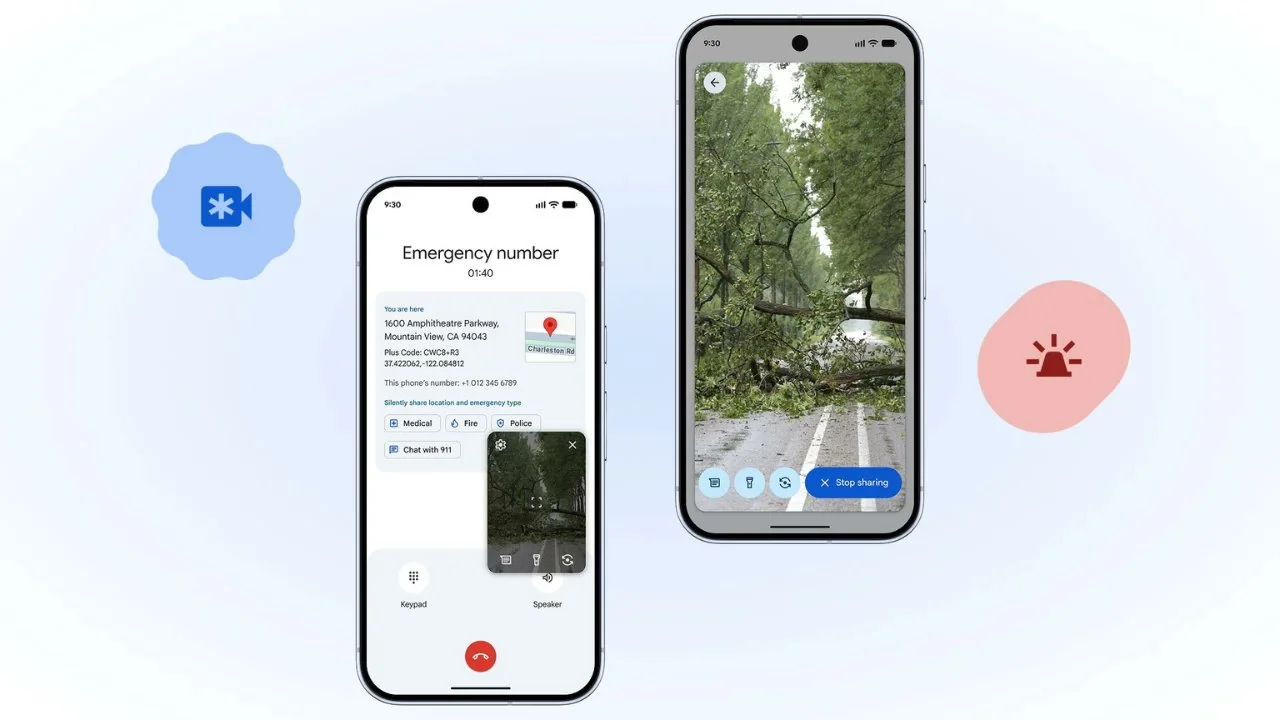
Google has unveiled a new safety feature for Android devices that allows users to share live video directly with emergency services when making an emergency call. The announcement marks a significant step toward helping first responders get real-time visual information during critical situations, potentially speeding up response times and improving outcomes.
What Google Has Announced
According to Google, the new Emergency Live Video feature lets users share live video from their camera with emergency responders when they place calls to emergency services on supported Android phones. The feature aims to give responders a clearer picture of what is happening at the scene — enabling faster and better-informed decisions.
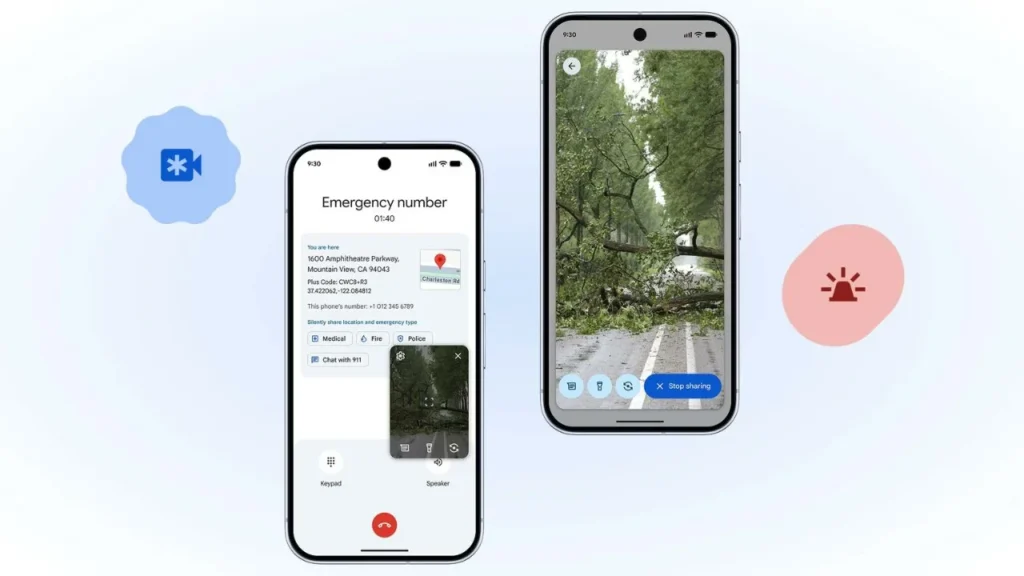
How Emergency Live Video Works
When a user calls an emergency number through the phone’s built-in dialer, Android may offer an option to share live video. Users can choose to enable video streaming during the call so that responders can see what is going on in real time. Video is streamed securely and only shared with the official emergency services endpoint. Google has emphasized that the feature respects user privacy and requires explicit user consent before live video begins.
Why This Matters
Emergency situations are often confusing, and critical details can be difficult to describe by voice alone. Live video gives dispatchers and first responders direct visual context — for example, the severity of injuries, location obstacles, fire intensity or hazards that might not be conveyed over voice. By providing responders with visual information early, this feature could help prioritize resources and improve outcomes in life-or-death situations.
Availability and Rollout
Google says Emergency Live Video will roll out on supported Android devices in partnership with participating carriers and emergency response centers. Initially, the feature will launch in select regions where emergency services infrastructure can support video input. The company plans to expand availability over time.
Privacy and Safety Considerations
Google has emphasized that live video sharing will be opt-in only and tied directly to emergency calls. Video is encrypted and transmitted securely, and not stored unless a user explicitly chooses to share recordings with authorities after the fact. Users who do not want to share video can continue using traditional voice calls without enabling the feature.
How It Compares to Existing Tools
Some emergency apps and services already provide the ability to send location and text information during an emergency call. What sets Emergency Live Video apart is its direct integration into Android’s emergency calling system — making it easier and faster to use without relying on third-party applications.
FAQs
What devices will support Emergency Live Video?
Google has not yet shared a full list, but the feature will appear on newer Android phones and be enabled through system updates with carrier collaboration.
Is the live video shared automatically?
No, users must consent to share live video when prompted during an emergency call.
Will this work worldwide?
Initially the feature launches in select regions where emergency services infrastructure supports video, with plans for broader expansion.